

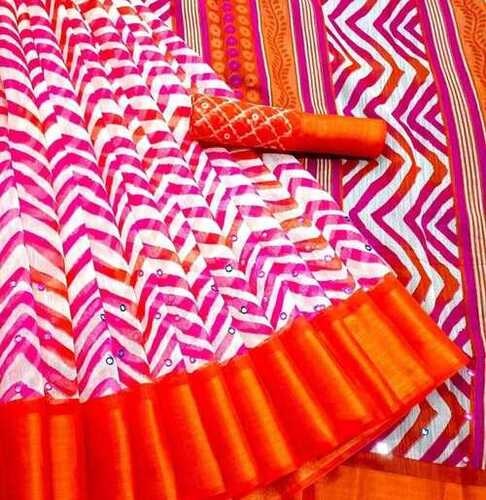
LEHERIYA Is a style of dyeing fabric. Fabrics-generally turbans or sari lengths-are rolled diagonally from one corner to the opposite selvedge, and then tied at the required intervals.
The pattern results in diagonal stripes. If multi-colored stripes are required, they can be obtained after the first dye-bath by opening up some sections of the rolled fabric, leaving other sections still tied and tying up fresh sections, then dyeing the whole, or part, of the fabric in a fresh color. After the patterning process has been completed in one direction, striping in the opposite direction can be added. First, the fabric is unrolled and then rolled up again from the next corner along. The dyeing and tying process is then repeated and a chequered pattern of intersecting diagonals results.
Leheriya is tied wet, with the fabric looped around a short vertical wooden pole. The tying is arduous work done by Muslim crafts workers, and as with bandhani, Leheriya is sold with its ties still in place. A small end Portion is unravelled to display the pattern.
What is Leheriya?
Leheriya, also popular as lehariya, is a traditional style of tie & dye clothing. It beautifully exemplifies the rich heritage of the state of Rajasthan. Further, the dyeing technique derives its name from the Rajasthani word for wave. This technique results in bright and colorful leheriya saree with distinctive wave patterns.
Moreover, what makes this traditional art very fascinating is the way the ripple effect comes out in attractive colours. If you come across any leheriya saree, you will notice the diagonal stripes in white along with mesmerizing colour combinations.
Check Leheriya sarees at
Available at Jaipur:- Rattan Deep Store Zari
Available at Delhi:- Rajasthali, Dilli Haat
History
Local traders patronized the traditional art of leheriya in the 19th and early 20th century. These were actually the traders and merchants who used to wear turbans of colorful Leheriya fabric. For a long time, leheriya formed an essential part of male business attire in the state of Rajasthan. Interestingly, the royal class, especially from the Marwari community, used to wear blue head turbans.
Depicting joy, the motifs and designs of this traditional art beautifully illustrate the simplicity of the Rajasthani culture. Gradually, women’s clothing also saw the introduction of leheriya in a range of items. These included sarees, dupattas and lehengas. In modern times, leheriya is part of casual clothing such as.
The Technique – Leheriya Sarees
Skilled craftsmen practice dyeing using the tie-resist method. They make the beautiful patterns of countless waves respectively.
Firstly, artisans select fabrics in cotton, silk, chiffon or georgette in lighter colors. Next, they tie and fold the cloth in a skillful manner. The end result is the appearance of the striped pattern on the cloth. Moreover. it is amazing to see bright colors on every alternate stripe.
Traditional method sees the use of natural dyes and multiple washes. Also, artisans use indigo or alizarin during the final stage of preparation. The traditional style of leheriya is currently being produced at many places in Rajasthan. These include Jaipur, Jodhpur, as well as Udaipur.
SIGN UP FOR NEWSLETTER
Be the First to Know. Sign up to newsletter today
 904 views
