SIGN UP FOR NEWSLETTER
Be the First to Know. Sign up to newsletter today


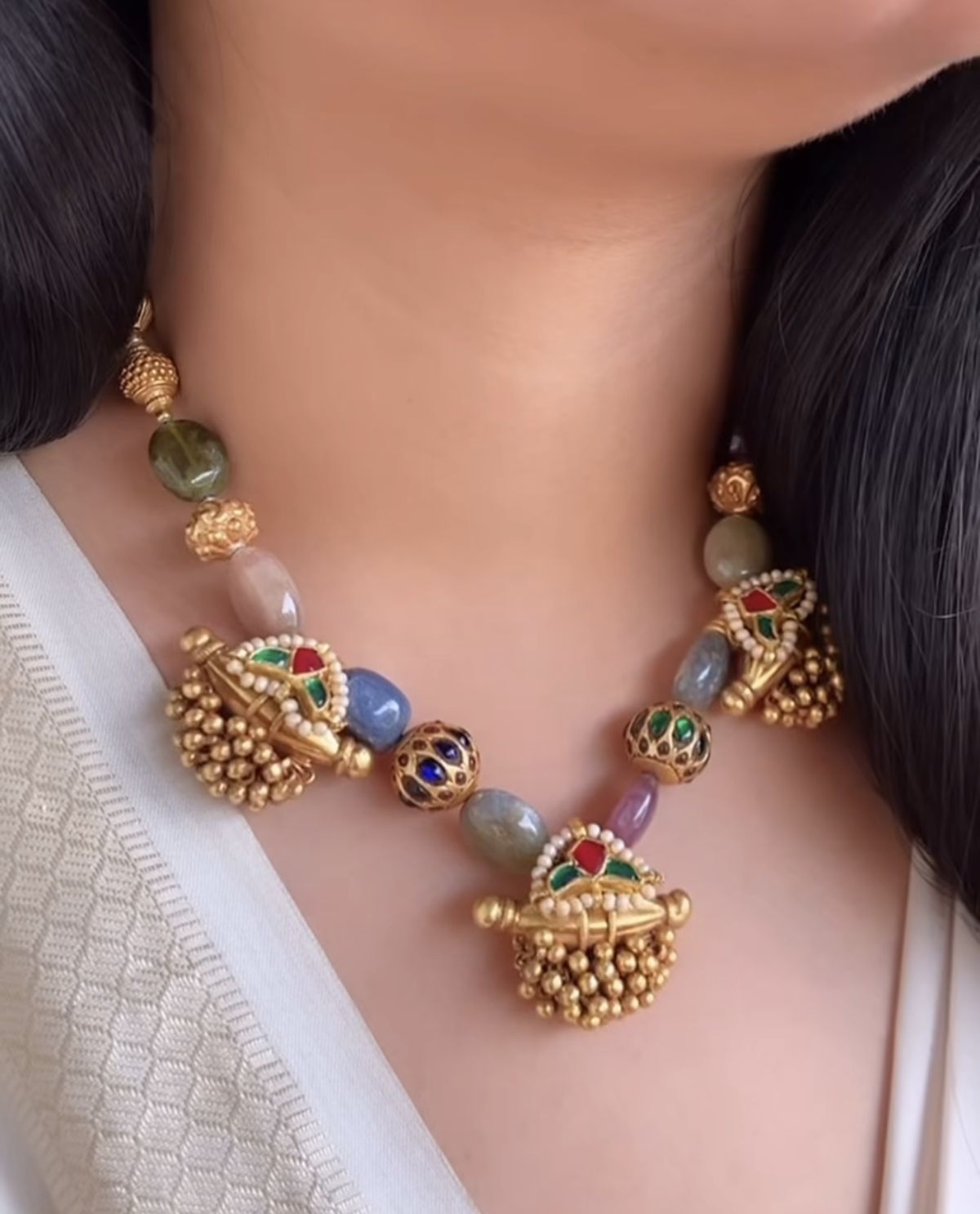

Jyoti

403 views

add comment
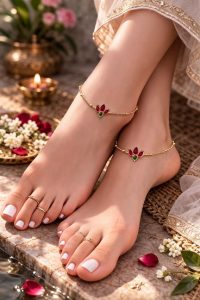
Anklets
Anklets, known as payal or pajeb, are worn around the ankles and often feature delicate chains, bells, or charms. Besides their musical tinkle, anklets hold cultural importance, denoting marital status in some communities and adding a graceful finish to the feet. Anklets are usually made of silver and may include small bells that produce a soft, pleasant sound while walking. They are commonly worn by brides and young women during weddings, festivals, and cultural events. The gunguroo, another form of payal, is a traditional percussive element in Indian classical dance. It has larger tinkling bells that aid the dancers with the beats.
The Parfois SS26 collection uses the gunguroos for rings, belts and on dresses. It is an innovative way to use the tinkling bells.

The Nose Ring, also known as nath or nathni, is a traditional ornament worn on the nose.In fact, Jean Paul Gaultier 2017 collection included the sari inspired dresses with the nosering or nath.
It is one of the oldest and most culturally significant pieces of jewellery in India.In many parts of India, the nose ring is considered an important part of bridal jewellery. Brides often wear large and decorative nose rings during weddings, sometimes attached to the hair or ear with a delicate chain.
The practice of wearing a nose ring is believed to have become popular in India during the period of the Mughal Empire, when it was introduced from the Middle East and later became an integral part of Indian culture. Over time, different regions developed their own styles of nose rings, varying in size, design, and the side of the nose on which they are worn.Today, nose rings are worn not only for traditional reasons but also as a modern fashion accessory. They come in many forms such as small studs, hoops, and elaborate rings, and are popular among women of different cultures and age groups.
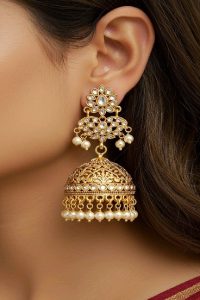
Jhumka
Indian Bridal Jewellery
In the Paris fashion week that was held recently ,Ralph Lauren’s Fall 2026 line featured the jhumkas. They were silver bell shaped earrings closely resembling the jhumka.
The Jhumka is a popular style of traditional Indian earrings known for its bell-shaped design. Jhumkas are worn across India and come in various sizes and designs. They are often crafted from gold or silver and decorated with pearls, beads, or colorful stones. Their swinging shape creates a graceful movement when worn, making them a favourite choice for weddings and festive occasions.
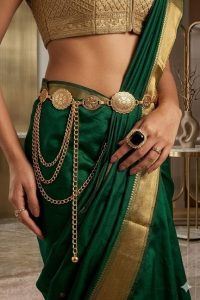
Kamarband
The Kamarband is a beautiful waist belt worn around the waist over a saree, lehenga, or other traditional attire. Historically, it was used by royal women and dancers to accentuate the waistline and keep garments in place. Kamarband are usually made of gold or silver and decorated with gemstones, beads, or intricate carvings. It is an essential Indian bridal Jewellery. It is an essential accessory in classical dance forms like Bharatanatyam and Odissi .
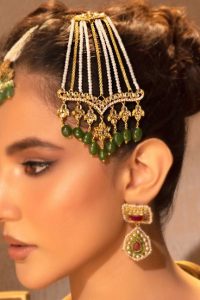
The Jhoomar, also known as a passa, is a decorative head ornament worn on the side of the head. It is usually attached to the hair near the temple and hangs gracefully over the forehead. The Jhoomar is commonly worn by brides, particularly in North India and in Mughal-inspired bridal styles. It is often made of gold and decorated with pearls, kundan stones, or diamonds, adding elegance and royal charm to the bridal look.
Together, these jewellery pieces epitomise the elegance and artistry of Indian ornamentation, continuing to enchant wearers and admirers alike across generations.
In conclusion, Indian jewellery reflects the country’s rich artistic heritage and cultural diversity. Ornaments like the Jhoomar, Kamarbandh, Jhumka, and Anklet are not only decorative but also carry historical and traditional significance. They are integral part of Indian bridal Jewellery .They continue to be cherished as symbols of beauty, elegance, and cultural pride in India. Delhi, Jaipur, Chennai & Kolkata are known for their exquisite jewellery craftsmanship.
Be the First to Know. Sign up to newsletter today
