
Pongal

From Fire to Rice to Rhythm: Pongal, Lohri Harvest festivals

auther new

Jyoti

view new

3725 views

add comment


What is Thanksgiving festival in India

Lohri is a popular winter harvest festival celebrated mainly in North India, especially in Punjab, Haryana, Himachal Pradesh, and parts of Delhi. It holds great cultural and agricultural significance and marks the end of the cold winter season.

When is Lohri Celebrated?

Lohri is celebrated every year on 13 January, a day before Makar Sankranti. It coincides with the time when the sun begins its northward journey (Uttarayan), signaling longer days and the arrival of warmer weather.

How is Lohri Celebrated?

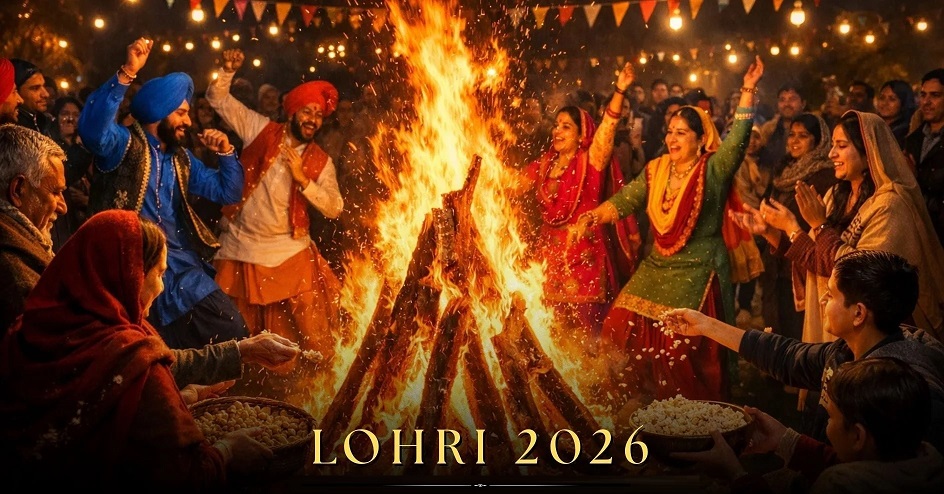
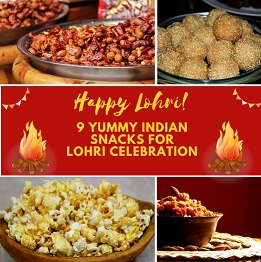
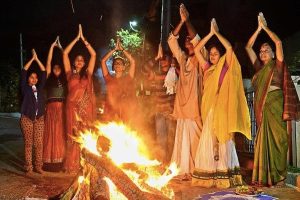
Lohri festivities mainly take place in the evening. People gather around a bonfire, which is the central attraction of the celebration. They walk around the fire, offer foods like rewri, peanuts, popcorn, sesame seeds, and jaggery, and pray for prosperity and good harvests. Traditional Punjabi songs and folk dances such as bhangra (by men) and gidda (by women) are performed with great enthusiasm. Families and friends come together, exchange sweets, and share festive meals.

Why is Lohri Celebrated?

Lohri is celebrated to thank nature and the Sun God for a successful harvest and to pray for agricultural prosperity in the coming year. It is especially important for farmers as it marks the harvesting of rabi crops like wheat and sugarcane. Lohri is also associated with the folk legend of Dulla Bhatti, a local hero who helped the poor and is remembered during the celebrations.


Pongal Festival: 

Pongal is an important harvest festival of South India, especially celebrated in the state of Tamil Nadu. It is a thanksgiving festival that shows gratitude to nature for a good harvest.


When is Pongal Celebrated?

Pongal is celebrated every year in mid‑January, usually from 14 January to 17 January. It marks the beginning of the Uttarayan period, when the Sun starts moving northward and the days become longer.


Why is Pongal Celebrated?

Pongal is celebrated to thank the Sun God, Mother Nature, and farm animals for helping farmers grow crops. It marks the end of the harvest season, especially the harvesting of rice, sugarcane, and other crops. The word “Pongal” means “to boil over”, symbolizing prosperity and abundance.


Who Celebrates Pongal?

Pongal is mainly celebrated by:

  • Tamil people in Tamil Nadu
  • Tamil communities in Sri Lanka, Malaysia, Singapore, and other parts of the world
  • Farmers and agricultural families, though today people from all walks of life celebrate it

It is one of the most important festivals for the Tamil community.


How is Pongal Celebrated?

Pongal is celebrated over four days, each having special importance:

1. Bhogi Pongal

Old things are thrown away and homes are cleaned

Bonfires are lit, symbolizing new beginnings

1.The 1st Day of  Pongal festival- Bhogi 

Pongal

This first day is celebrated as Bhogi festival in honour of Lord Indra, the rain god. People clean homes and all the rubbish is thrown to burn. A bonfire is prepared and the unwanted items form the field and the homes are thrown into it. This symbolizes a new beginning. A special sweet, Poli, is prepared with flour and jaggery on this day. The flour is rolled like a stuffed roti(flat bead) with jaggery in the middle. This is similar to the Lohri & Bihu festival.

Pongal

Villages and rural towns in Tamil Nadu are festooned with colourful flowers, garlands and buntings. There is an air of celebration and bonhomie everywhere. It is the Pongal festival. It is one of the most important festivals in Tamil Nadu. There is folk music playing from the loudspeakers, flashy and ostentatious decorations all over the town and groups of boisterous youngsters roaming around village fairs. Farmers are dressing up their cows and getting ready for the festival. It is certainly the time of the year that villagers look forward to. The landowners and the peasants come together in the village to celebrate this festival. Further, families come together during this time of the year.

2. Thai Pongal. Thai is the month in which the festival is celebrated.

Main day of the festival

A sweet dish called Pongal is cooked using freshly harvested rice, milk, and jaggery

People pray to the Sun God for prosperity The 2nd day is the Pongal festival. In addition, homes are decorated with Rangoli or kolam. It is done with white rice powder and coloured powders. People are attired in new clothes. Sugarcane, coconut and bananas are offered to the God.

Sankranthi Pongal

For instance, in the state of Andhra, the rangoli is known as Sankranthi Muggulu. The Sankranthi Muggulu are rangoli designs on the floor with coloured powders. Muggulu is Rangoli in Telugu language.

Pongal Dish

As a matter of fact, Pongal, is also the name of the dish cooked on that day. Rice, lentils and milk are boiled on earthen pots over wood or coal in the courtyard. A turmeric plant is tied around the pot. The whole family gathers around the pot and cries “Pongalo Pongal” while clanking pots & pans, when the water boils over the pot. This symbolically refers to “ Let the food be bountiful and let our lives overflow with joy and happiness.”


Further, a sweet dish with Pongal is also made by adding a bit of jaggery & milk to it. Turmeric and sugarcane is also placed together. Rice cakes that are made  in  the state of Assam for Bihu are similar.

3. Mattu Pongal

Dedicated to cattle which help farmers in farming

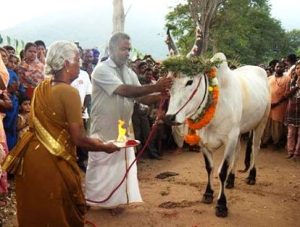
Cows are decorated and worshipped

Mattu Pongal

This is the auspicious day for cows. People worship the cows with garlands & colourful bells. The cows are brought to the village centre and  paraded on the roads. Cattle race is part of the show.Jalli Kattu (taming of the bull) is a big sport that is practiced in some areas. There is a money tied to the horn of the bulls and they are let loose by the owners. Young men chase the bull to retrieve the money. However, there is no physical harm done to the animal in this sport although there is a continuing controversy about playing this sport as compared to other sports. People do claim that it is cruelty to animals. It is a rural sport and there are several people lobbying to retain the sport.

4. Kaanum Pongal

Families visit relatives, friends, and enjoy picnics

Time for social gatherings and enjoyment

Homes are decorated with kolams (rangoli), people wear new clothes, and festive meals are shared.

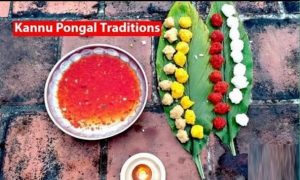
Kanu Pongal or Kanum Pongal is celebrated on the forth day.

The turmeric leaf is washed and placed on the ground. Left over pongal, sweet pongal, turmeric rice and curd rice are all placed on the leaf, along with sugarcane and banana. Further, all the women gather around and call out to the birds. and feed them. They pray for the well being of their brothers and their families. The saying goes that as birds flock together, families should remain close together always. Hence the celebration. It is an occasion when married women visit their maternal homes to meet with their brothers and parents and seek their blessings. They are warmly welcomed with gifts.

Special gifts are given to girls on Pongal.

Pongal

When is the Harvest Festival

The day is marked in the calendar as the sun’s journey from the southern to the Northern hemisphere. It is the first day the transmigration of the sun into the zodiac of Capricorn (known as makara rashi in the Indian calendar). Hence the festival is popularly known as Makar Sankranti. Prayers are offered to Surya, the sun god and Indira, the rain god. In addition, it is the end of the winter solstice and the end of the harsh winter in North India. In other words, it marks the beginning of the spring season. Read on to know more about the festivals (https://en.wikipedia.org/wiki/Lohri).This year, Makar Sankranti will be celebrated on January 14th. Finally, as per the Hindu solar calendar, the festival is celebrated to mark the shift of the sun into ever-lengthening days. It is also marked with kite flying.

The much awaited harvest festivals will kick off in the country starting on the 13th of January 2026. The festival is known by different names in different parts of India–Lohri, Pongal, Bihu as well as Makar Sankranti. Pongal, is celebrated in South India and Makar Sankranti in several other regions of India. Lohri, essentially a Punjabi festival, is celebrated on January 13 each year with joy and enthusiasm in Punjab & North India Magha Bihu is a harvest festival celebrated in Assam in the North East. In addition, the harvest festival, BIHU, is celebrated in Nepal too.

Conclusion

Pongal is a festival that celebrates gratitude, hard work, prosperity, and harmony with nature. It reflects the rich agricultural and cultural traditions of South India and brings happiness and togetherness among people.

Music & Dance-cultural celebrations  & SHOPPING

People celebrate the Pongal festival with music and dance performances all around the State. Shops offer special discounts on Pongal purchases. Therefore, make the most of this and enjoy shopping in Chennai.

Finally, visit the T Nagar and the Mylapore Market in Chennai to make Pongal purchases. Shops such as Sarvana Stores, RMKV and Pothys all have a special discount on Pongal purchases. The Mylapore Market area near the Kapalishwar Temple organises a Rangoli competition. Enthusiastic participants cover the entire stretch of road. Women also participate in traditional Board Games.

Shop in Karol Bagh, Lajpat NagarSarojini Nagar Markets for new clothes and utensils.

Bihu- ASSAM

Pongal

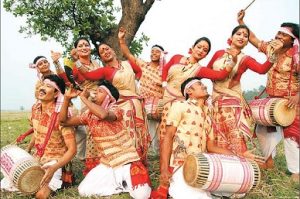
Further, people in the north east celebrate this festival as Magh Bighu 2026. There is a bonfire in the last day of the previous month and people rejoice, cook dinner and dance around the fire. For instance, rice cakes & sweets with coconut are made and young men and women dance and play games. In addition, bull fighting is also a sport that continues. In addition, shopping & wearing new clothes is an important part of the celebrations.

The harvest festivals are celebrated around the fire and rice & sugarcane are cooked and eaten across India. It is thanksgiving for the rich harvest.

Shopkhoj Wishes its readers a Happy Pongal/Lohri/Bihu /Makar Sankranthi.

Also Read

Makar Sankranthi in Bangalore

3.9/5 - (13 votes)


Leave a Message

By commenting you accept the Privacy Policy

5 thoughts on "From Fire to Rice to Rhythm: Pongal, Lohri Harvest festivals"

  1. Pingback: My Homepage
  2. Monique says:

    Thanks, quite great article.

  3. Colleen says:

    Heya just wanted to give you a brief heads up

  4. Thirumalai says:

    Beautifully written.

  5. kantor bola says:

    Hi there mates, good paragraph
    I am actually enjoying by these.


View our videos

Subscribe To Our Videos/Blog/Newsletter